Thu, 3 Apr 2008, 04:04 PM The State of the IHRA |
By Jim Samuel Photo copyright 2008 Roger Richards & BME Photography |
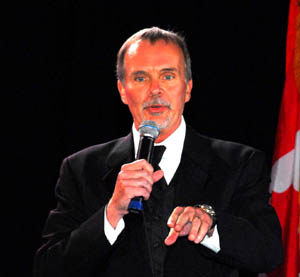 Aaron Polburn
|
"I'm very bullish on 2008," says Polburn, president of IHRA. "A lot of positive things have happened." IHRA sanctions and presents the Knoll-Gas Nitro Jam™ Drag Racing Series, an 11-event North American professional drag racing circuit.
"We have more sponsors and more sponsorship dollars in the bank than ever before," Polburn says, adding that there are more deals in the works that could be in place before the season starts in San Antonio on April 4th.
And though several pro racing teams have found themselves with funding problems, after Torco Race Fuels and Knoll-Gas suspended their team sponsorships for the 2008 season, Polburn says he is confident that IHRA and the teams can work together to get through the season.
One measure of IHRA's success is the number of tracks that switched to its affiliation during the off-season. "We picked up seven new tracks and only lost one," Polburn says. Among the drag strips that joined the IHRA fold are Abilene Dragstrip in Abilene, Texas; Middle Tennessee Dragway in Buffalo Valley, Tenn.; Thompson Raceway Park in Thompson, Ohio; Quaker City Raceway in Salem, Ohio and three others.
One new feature on the 2008 schedule is the inclusion of a planned one-eighth mile national event for the first time. During the 2007 season, two races - in San Antonio, Texas and Tronto, Ontario - were changed to one-eighth mile during the race weekend after problems with the track surface forced race officials to choose between racing to the eighth mile or postponing the event.
In both cases, IHRA decided that it would be better to complete the national event at one-eighth mile, and fan reaction to the change was very good, says Polburn. That was a change the turned out to be popular among the fans at both events.
"We stumbled onto something that provided some very good entertainment," Polburn said, adding that fans liked being able to see the start, finish and the entire race in between. "The fans can see the whole race," he says. "They can see the start, the finish and see the chutes come out."
 |
"With the cost of building a track and the cost of real estate, it becomes more feasible to run one-eighth mile," he says, adding the 1,000-foot drag strips are also a possibility.
"I'd like to see races of all three lengths," he says. "One-quarter mile, one-eighth mile and 1,000 feet, because I like variety."
"I'm trying to learn how to make a more viable entertainment product," Polburn says. "I don't know what the future holds but I want to make sure I am ready for it."
The word "entertainment" is one that pops up a lot in a conversation with Polburn. And it's a word that Polburn uses unapologetically. "We are in the entertainment business," he says, adding that that means configuring each event to make sure the fans enjoy themselves and the show, whether that means running on a quarter-mile track or eighth-mile track.
Polburn's emphasis on entertainment has taken greater hold since IHRA's parent company, Live Nation, Inc. was spun off from Clear Channel Communications in 2005. In addition to IHRA, Live Nation also operates supercross racing, monster truck shows and other motorsports events. Live Nation is also the nation's largest producer of live music and other events.
"Live Nation's forte is entertainment," Polburn explains. "We speak the same language."
 |
"The click through on the site has been beyond my expectations," Polburn says of reaction to the new Web site. As for the magazine, Polburn says the issues produced since Wood took over are "spectacular."
After two years of competition, Polburn says that IHRA's Nitro Funny Car class is right where he thought it would at this point in time.
"I told everyone it was going to take three years to grow the class and it has," Polburn says, adding that while the Nitro Funny Car class has grown the way he expected, one aspect of it has not gone as he had thought it would.
"I was surprised that no alcohol drivers moved to Nitro Funny Car," Polburn said. "I expected that some would use alcohol as a stepping stone but that didn't happen. I thought it would be like the Top Dragster class," he says. A number of IHRA Top Fuel drivers moved into the nitro-dragster class from Top Dragster.
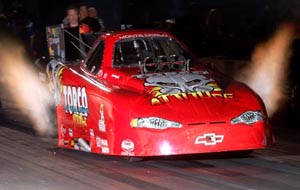 Dale Creasy
|
"The new ladder has been great, Polburn says. "We've had the tightest professional points races we've ever had."
By pairing the first and fifth quickest competitors, second and sixth fastest, and so one, IHRA has taken away much of the advantage awarded to the top qualifier in each professional field. Instead, IHRA has created more a more competitive first round of eliminations, with all cars and drivers being more closely matched, Polburn explains.
"When one races against 16, more times than not the faster car wins," he says. "It's caused upsets and tightened the points races."
While IHRA has taken away some of the advantage given to the top qualifiers, it gave qualifiers an additional way to win points during Friday and Saturday night qualifying sessions. Called "Last Man Standing," the program was started with the 2007 season. Under the "Last Man Standing" format, each pair of cars that qualifies will have a declared winner. The quickest winner of the session is awarded five bonus points. Drivers can win bonus points for each of the two night qualifying sessions.
"It's worked out great," Polburn says, of the qualifying format. In the past, he explains, fans who came out to the Friday and Saturday evening qualifying sessions would see quick runs down the track, but in reality, those runs did not mean anything.
"This provides the fans with more drama than in the past," he says, adding that the qualifying should be even better during the 2008 season. "The drivers are more used to it now," Polburn explains.
Though Polburn sees a lot of positives for IHRA in 2008, he does acknowledge that team sponsorship could turn into a problem this season, after the recent announcement that Knoll Gas and Torco Racing Fuels would be suspending all sponsorships for the 2008 racing season. The suspension does not affect Knoll Gas' sponsorship of IHRA professional racing series.
"It is going to reflect on our teams," Polburn says. "I've talked to all of them except one. They are all planning to start the season." But, he acknowledges, some of the teams could have funding problems later in the season if they don't replace the lost sponsorship money.
"It's a short-term problem that we all understand," he says, adding that IHRA will work with the teams to help them find sponsorship funding.
"I do not want to go through the season without Dale Creasy, Scotty Cannon, Jack Wyatt or any of the others," he says. "We just have to dig in and work with them."
By working together, Polburn says, IHRA and the teams can help each other met the funding challenge.
"Racers have tools in their arsenal that we don't have and we have tools that they don't have," he says. "It makes sense for us to work together."
Ready to take your order at 1-800-230-3030 | Customer Service 1-800-517-1035