


 |
 |
 |
 |

|
 |

 |
 |
 |
RAMSTEIN AFB, Germany --
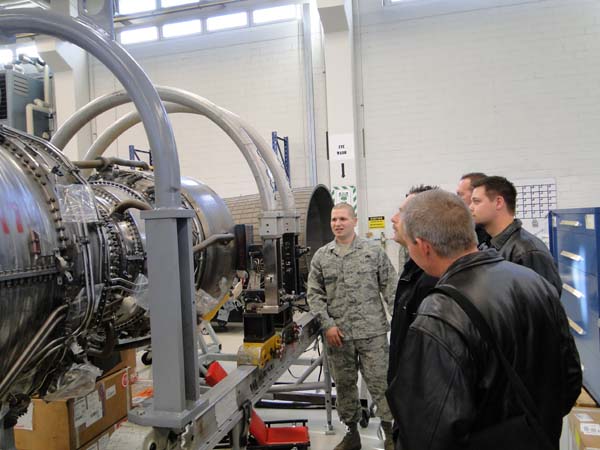
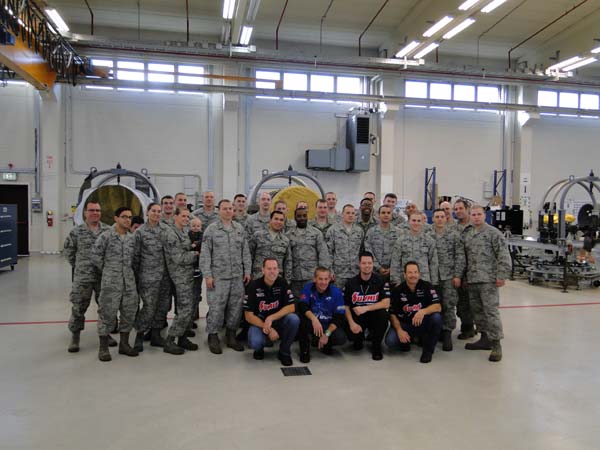
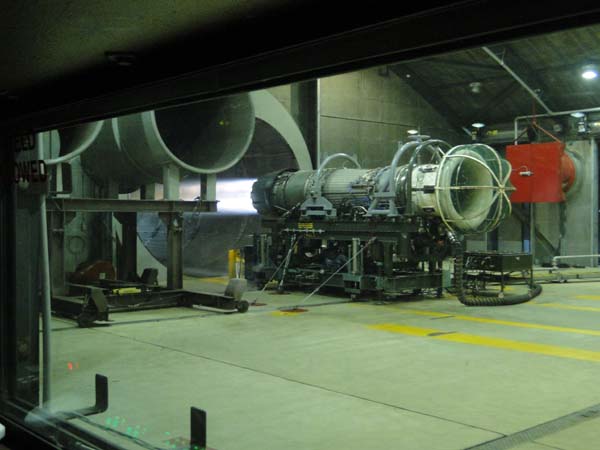
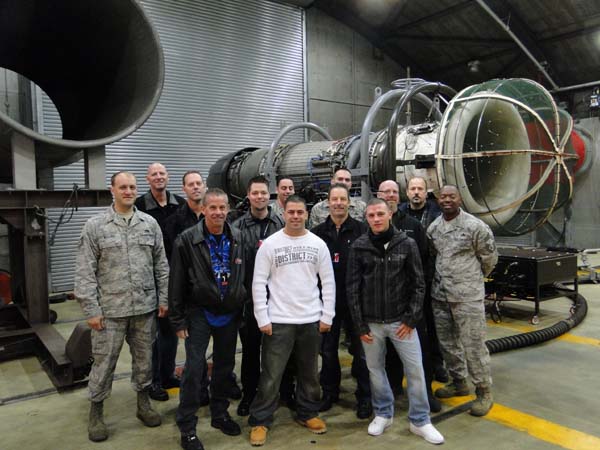
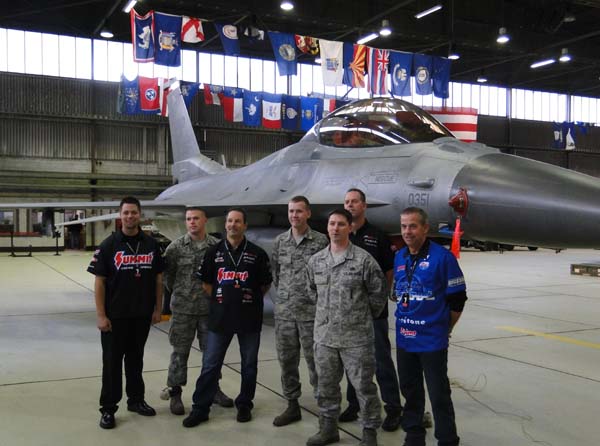
Today, 2011 NHRA Pro Stock Champion and former member of the United States Air Force Jason Line, takes you through Team Summit's Tuesday's activities: As you read in Dan Runte's column yesterday, during our visit to the Landstuhl Regional Medical Center on Monday, we were able to see the embodiment of the tremendous spirit, dedication and passion of the young women and men serving in our armed forces. Today, however, we were able to experience a completely different, yet equally impressive facet of our military's power. Our day got off to an early start with a quick breakfast at our hotel before we piled into our tour bus and took a 90-minute drive on the famous Autobahn to the Spangladehm Air Base. Immediately upon our arrival, the unmistakable sound of jet engines pierced the air, and we were treated to an impromptu air show as numerous A-10 Warthogs and F-16 fighters launched on their morning maneuvers. Upon meeting up with our on-site contact, we headed over to the 52 CMS Propulsion Flight building, which is the centralized engine repair facility servicing 108 F-110 & 47 T34 engines for the Spangladehm & Aviano air bases worth an estimated 547 million dollars. We were then introduced to Tech Sergeant Frost, who took us through a very detailed tour of their immaculate facility, showing us numerous engines in a wide range of repair, from totally disassembled to ready to be reinstalled in an airframe. Naturally, as an engine builder, this was right up my alley. As part of his presentation, Sgt. Frost explained that the F-110 engines were used specifically in the F-16 fighter, and that among the many parts these extremely intricate engines were 1,014 turbine blades that combined to produce over 30,000 pounds of thrust. He also used another disassembled engine to show us the elaborate array of spray nozzles which produce the powerful afterburner. He mentioned that each engine had a life span of approximately 4,000 cycles and that to assemble one unit from the ground up to fully operational, including testing, would take approximately 16 days. Considering just how complex this unit is and the demands that are placed upon it, that's quite remarkable. To illustrate some of the challenges the team faces in their everyday operation, they showed us one engine which they had nicknamed the "Dirt Devil". Apparently, the plane in which it was mounted had suffered a failure in the nose gear, which allowed to engine to ingest a ton of dirt, creating incredible damage. Even though the initial disassembly was almost halfway completed (with the core severely damaged), there was still an incredible amount of dirt still to be removed. Even so, the crew was confident this unit would be fully repaired, recertified and back in the air in a very short period of time - as I said before, remarkable. However, it was our next stop that provided us with the day's signature moment. From the maintenance facility, we proceeded over to the jet-engine equivalent of a dyno room, affectionately known as the "hush house". There, we had the pleasure of meeting Tech Sergeant McClure and Chief Master Sergeant Green, who promised to give us a display of power unlike any other we had seen. We proceeded into the building, stepping into the soundproof control room where through the protective glass we could see a F-110 engine mounted securely on a platform in the test bay, idling at a relatively low speed, which they told us they would be running through the paces shortly. This is where it gets good. We were offered the opportunity to experience the power of a fully operational F-16 engine first-hand - by sitting underneath it! Naturally, the four of us jumped at the opportunity, putting on the necessary hearing protection as provided by our hosts and then scrambling into position under the engine while the technicians ran through four power cycles right above our heads as we looked at the flames raging from the afterburner. I know it is hard to tell from the attached picture, but believe me - Greg, Dan, Rickie and myself are all huddled underneath there having a ball. It certainly was not what I had in mind for the day's activities when I got up this morning, but I'm both thrilled and honored that we were allowed to do it - as Greg put it, it puts our Pro Stock motors in a completely different perspective. They also allowed us to stand in other safe areas of the bay while they ran additional tests, allowing us to take numerous amazing pictures and videos. It is something I know none of us will soon forget. After a quick stop for lunch, we headed over to the Brick House, which is the community center at Spangladehm, for a quick autograph session, during which we were each interviewed by the Armed Forces Network. In addition, we taped a holiday message to the troops, thanking them for their service and wishing them the very best in this holiday season, a tape which we hope they will be playing extensively over the next few weeks. Our final stop at Spangladehm was at another training facility hangar, where a fully operational F-16 fighter and an A-10 Warthog "tank buster" were parked, along with a wide variety of armament, which Tech Sergeant McGuire very kindly and carefully took us through, allowing us to get an up-close and personal view of these two most impressive machines. The pride that these young men and women take in their work is not only obvious, but truly deserved. We then thanked our gracious hosts for an informative and entertaining day and boarded our bus back to Ramstein, where we had an enjoyable dinner before turning in for the night. We have one final day here in Germany, with another full schedule planned, so I invite you to come back tomorrow as one of my travel mates puts the finishing touches on our 2011 tour. As you can tell from today's activities, you never know what we'll be up to, and we look forward to bringing it to you. In closing, I would just like to thank all the brave young men and women we have come across over the last few days, and thank them for their tremendous service. Have a great evening.
|
|



Ready to take your order at 1-800-230-3030 | Customer Service 1-800-517-1035